
Built to endure
A modern, durability-focused composite engineering philosophy, designed specifically for long-range cruising and high-usage yachting.
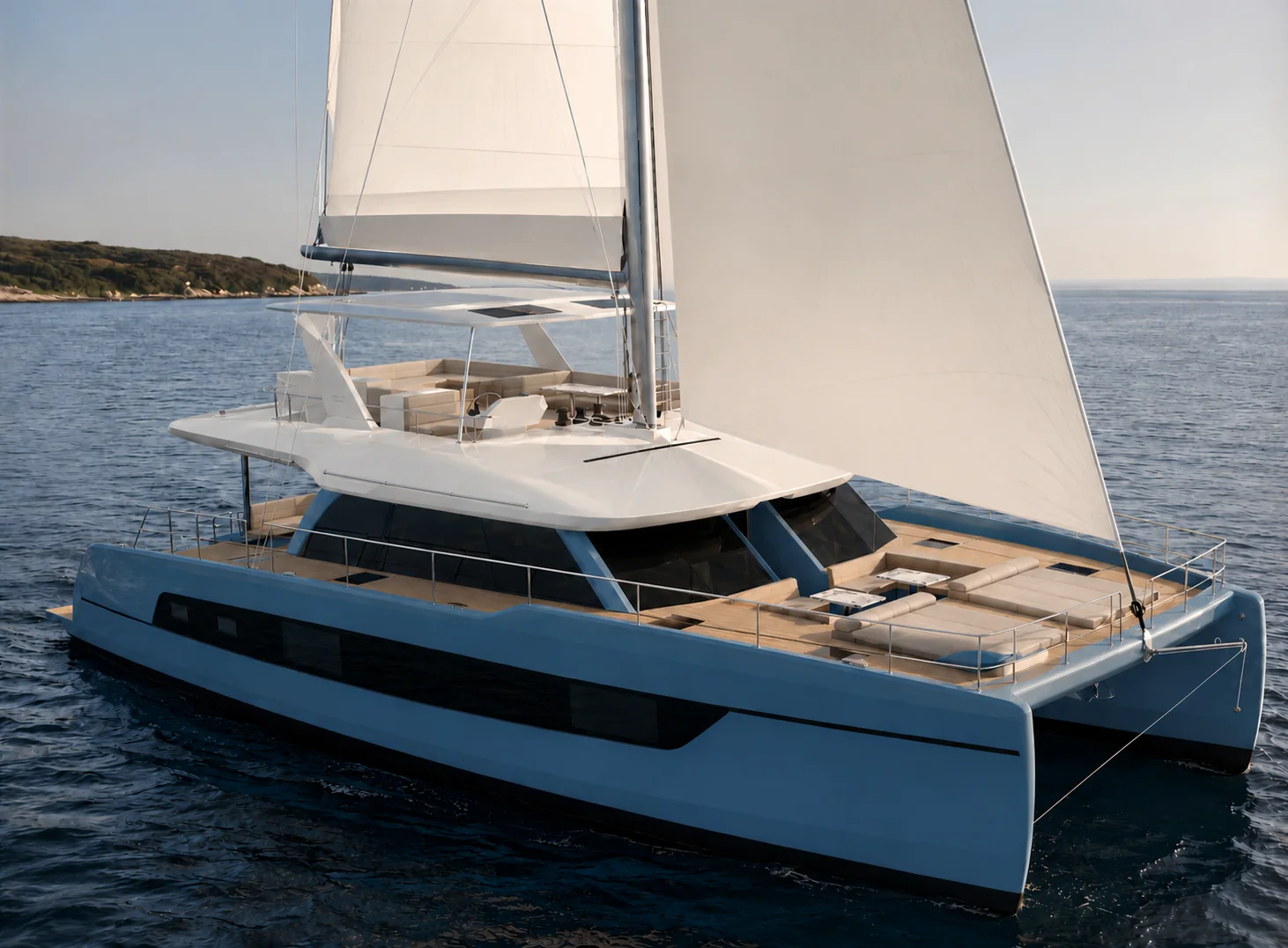
Single-mold construction
HeySea adopts a one-piece hull molding process for the primary hull structure — the same construction philosophy commonly associated with larger superyacht applications. Unlike many production yards that manufacture multiple hull sections and bond them together after molding, a one-piece hull is formed as a single continuous structure.
The practical benefit is the elimination of major longitudinal and transverse bonded seams within the main hull shell. Because bonded joints can become areas of concentrated stress over long-term use, reducing these interfaces improves structural continuity and distributes loads more evenly throughout the hull.
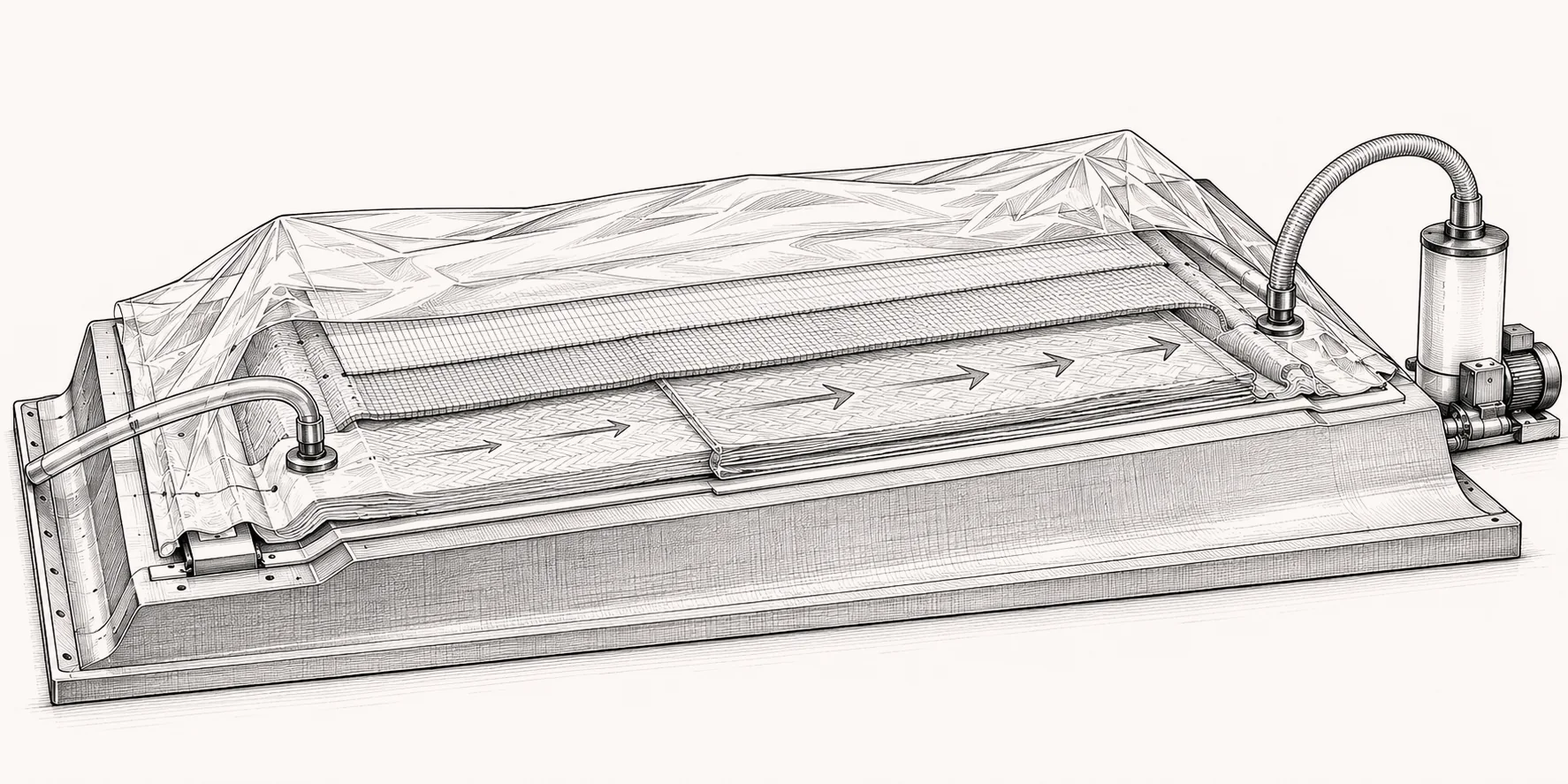
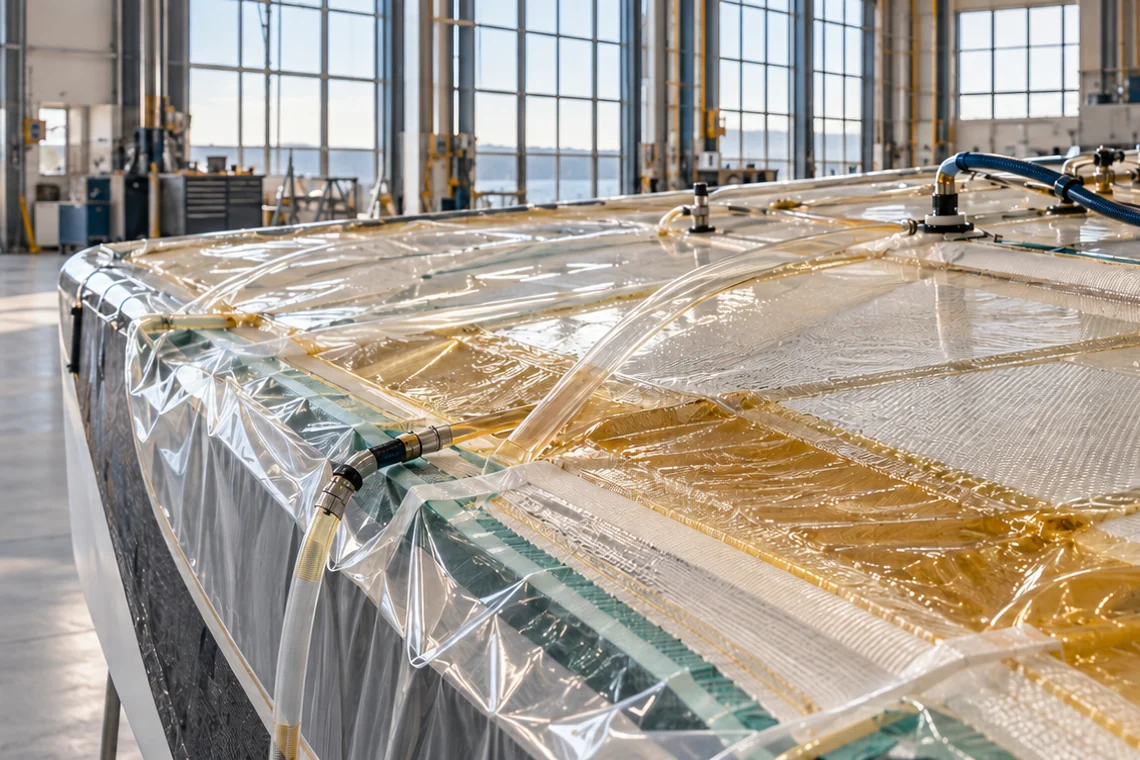
Infused, under vacuum
Every HeySea is built using a vacuum-infused fiberglass process with premium vinyl ester resin, widely regarded as one of the most robust modern manufacturing approaches for composite yachts.
Unlike conventional polyester resins, vinyl ester provides significantly greater resistance to water penetration and osmotic blistering — an important advantage in saltwater environments where long-term durability and reduced maintenance are priorities.
Stronger, lighter, more reliable
Combined with vacuum infusion, this process creates more consistent laminates with optimized fiber-to-resin ratios, resulting in stronger and lighter structures with fewer voids and air pockets than traditional hand-laid construction.
The result is improved structural consistency, reduced risk of hidden defects, and greater long-term reliability.
A hybrid laminate schedule
HeySea combines four reinforcements, each placed where its properties matter most.
Multiaxial fabrics
Excellent torsional stiffness and strength-to-weight efficiency — particularly important in catamaran construction, where cross-deck loads and hull twisting forces are significant.
Carbon fiber
Strategically incorporated in high-load structural zones to increase stiffness and reduce flex without unnecessary weight. A reinforcement more commonly associated with higher-end composite engineering, it improves long-term rigidity and fatigue resistance where stress concentrates.
Woven cloth
Contributes impact resistance and durability in targeted zones.
Chopped strand mat
Used selectively for laminate transitions and secondary bonding, rather than as a primary structural component.
Engineering you can feel
Explore the range, or request a brochure to see how this philosophy is applied to each model.
Explore all models